« AFFICHAGE SAUVAGE » BY SONAC
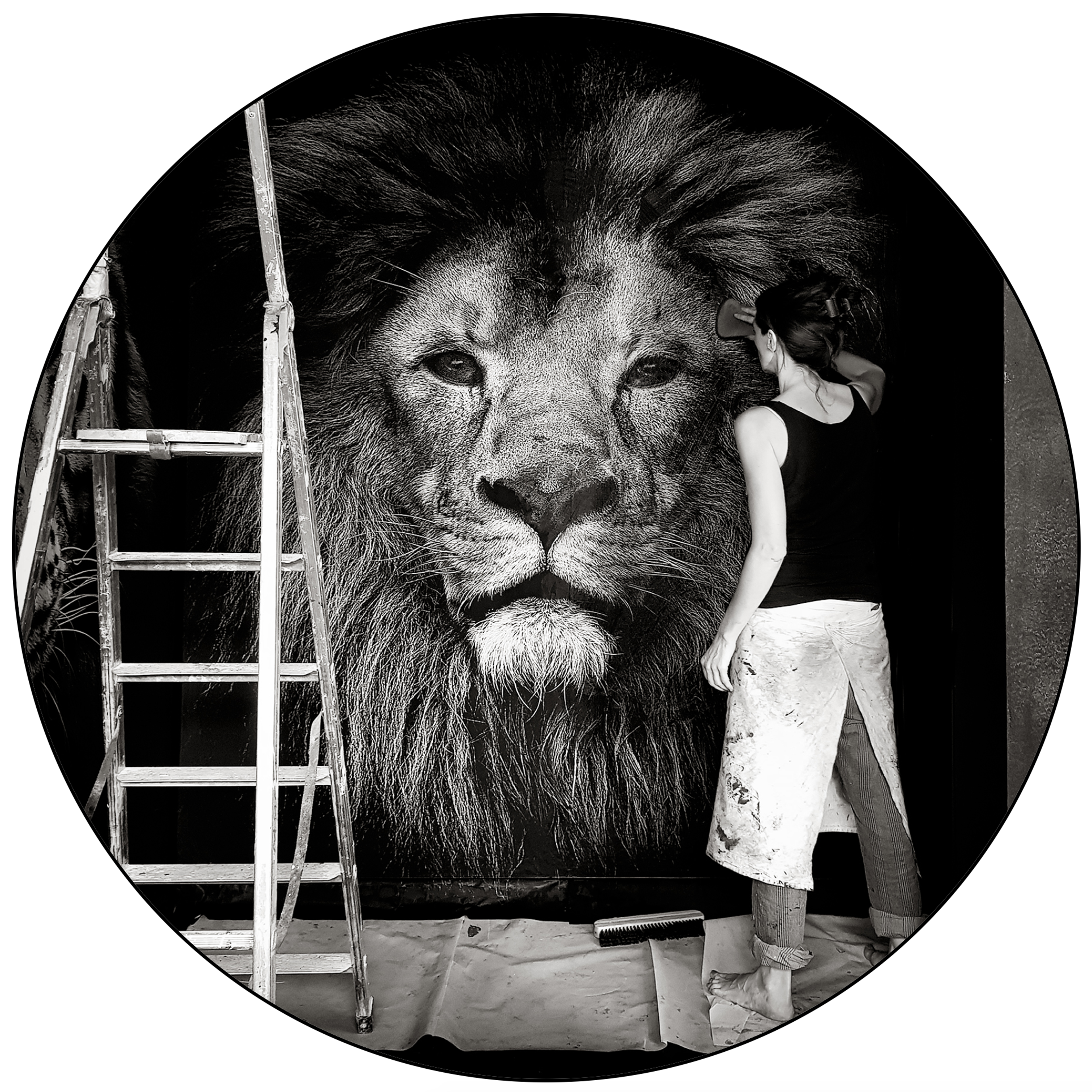
The birth of my project Affichage Sauvage in 2010 was rather unusual. It began after a long period bedridden due to rheumatoid arthritis—two years without being able to move my arms or legs, two years spent reflecting on everything: my life, my desires, my future… I quickly realized that if I could walk again, I wanted to approach my creative process differently. I wanted to share it constantly, no longer waiting for exhibitions where my work was only seen by a chosen few, but instead to offer it freely, out in the street, for everyone to see.
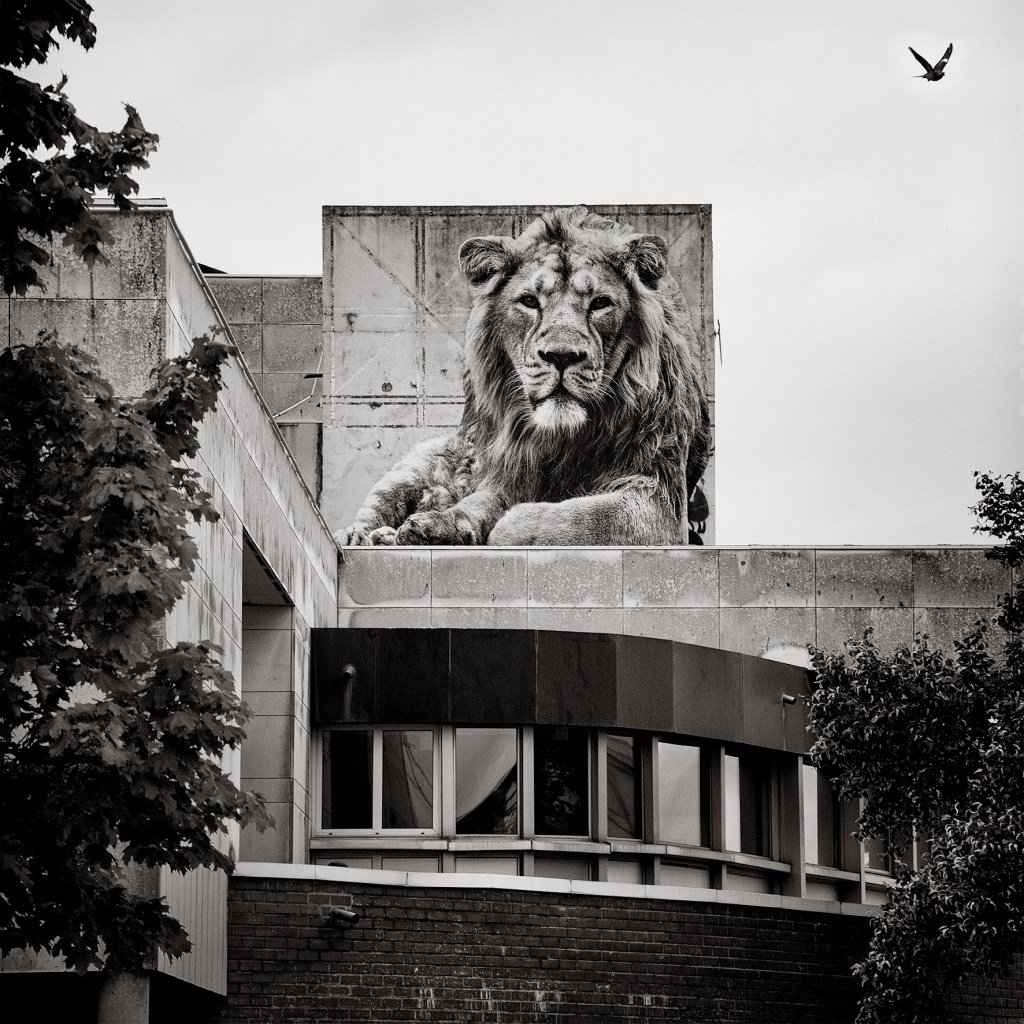
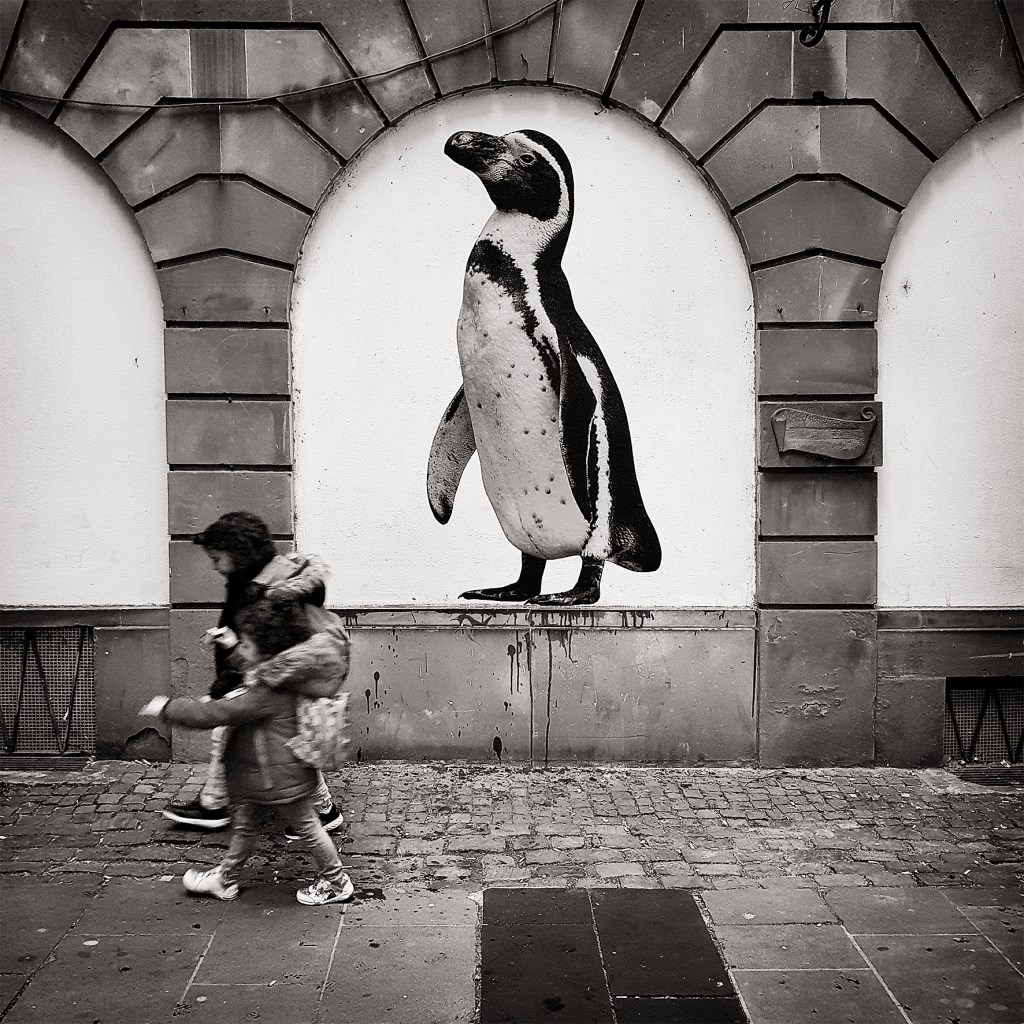
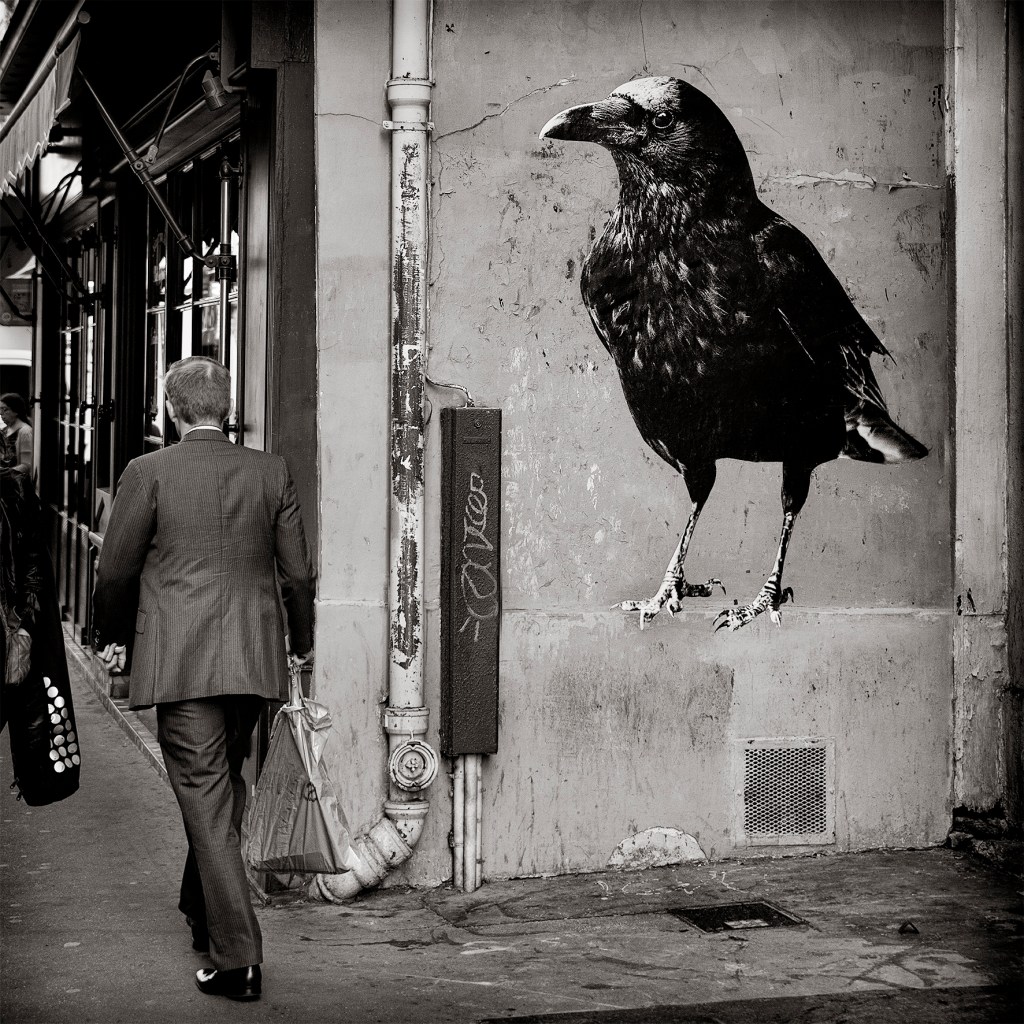
I wanted my animal photographs to carry more weight, to take on a new life. I also needed my work to convey a message—however small my contribution might be—because the place of animals in our society seemed to me a crucial issue. By using my photos and placing them in public space, I could prompt people to think. By working in harmony with the architecture of the wall where I would insert the animal, I could create real trompe-l’œil effects, intensifying the emotional impact for the viewer. And that’s how the Affichage Sauvage project was born: a powerful message hidden behind a gaze, a harmless animal on a wall that speaks to anyone willing to listen.
“I work through installations—ephemeral fusions between art and life.”
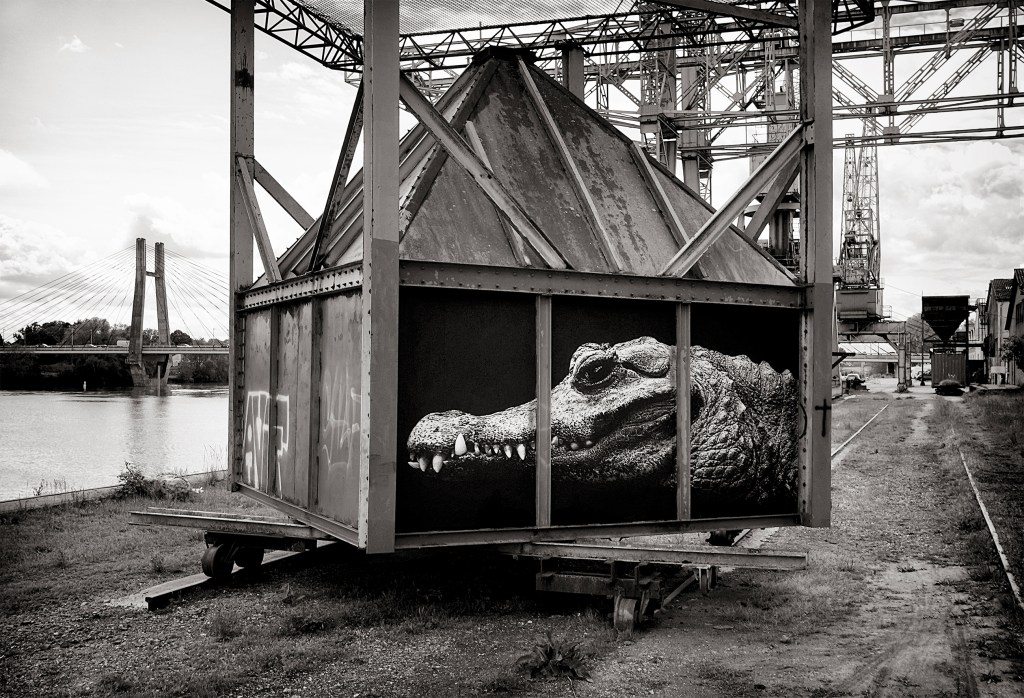
Around a street corner, art appears by surprise in everyday life, prompting the public to pause and question. By altering the conditions of perception, I draw attention, offering the viewer a new perspective on a familiar place. The street becomes a set, and in that moment of doubt, the spectator becomes part of the scene…
I paste my animal photographs on city walls. I’m always looking for the perfect location—a street, an abandoned factory, a forgotten urban space. I never know in advance. But it’s a meticulous search so the animal feels perfectly at home. The wall itself determines the animal and its size, so that the final photo—my mise en abyme—works and can be added to my collection. Because in the end, the only thing that remains of these ephemeral installations is the photograph. After pasting the image, I spend hours again watching for the light, the passerby, the situation that will allow the installation to fully come to life in the photograph, which will become part of the Affichage Sauvage collection.
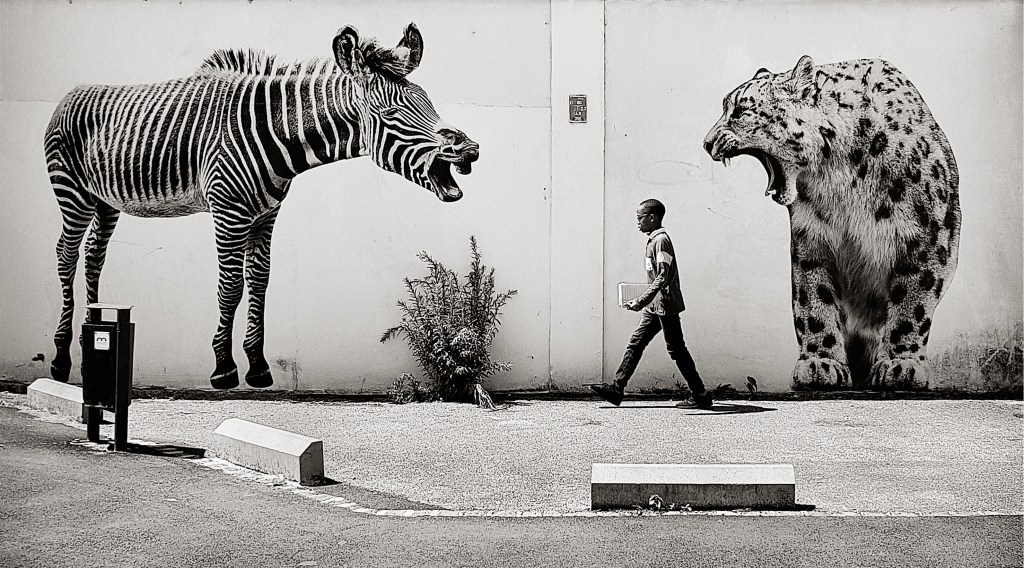
The animals reclaim a new dignity here: they are at the center of the creative act, bearers of meaning, imagination, and metaphor. Are we reconnecting with the wonder of childhood, with its fascination for animals, the myths they’ve inspired, and the tales in which they are the heroes?
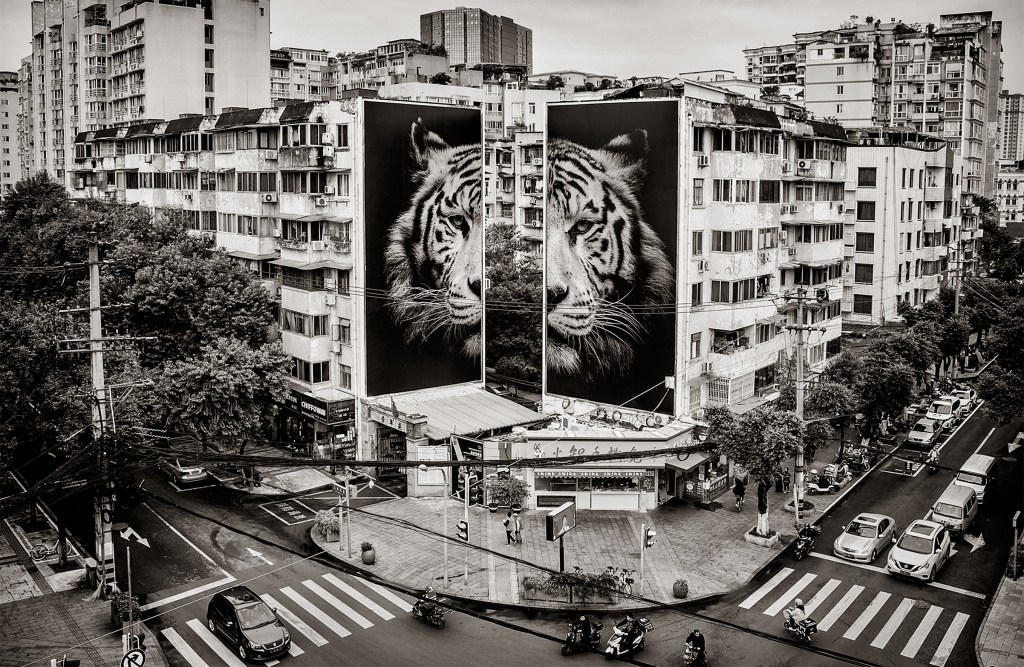
Animals confront our modern world.
In just fifty years, we’ve lost more than half of all animal species. The alarm has been sounding for a long time, and yet little real progress is being made. The die-off continues, and many species now exist only in captivity. They are the indicators of the health of our planet… and it is still not too late to act. “Raising public awareness about the protection of our natural heritage is the first step toward awakening consciousness and changing behaviors.”
My work through Affichage Sauvage contributes to that awareness. Each year I introduce new animals, and many of them are endangered species that may not survive the next fifty years…
A critique of humanity, a critique of human society, a call for responsibility in the fate of nature. The animal bears witness—it questions the world.
My paste-ups raise a fundamental question: the place of animals in our society. Reintroducing their images into our everyday lives is a militant act that encourages us to reflect on their status as living beings.
As if the animals were coming back to haunt our cities, bearing witness to what we have done with these urban spaces from which we’ve driven them out.
I invite the public to reflect on how we might reconcile economic development with respect for the environment.
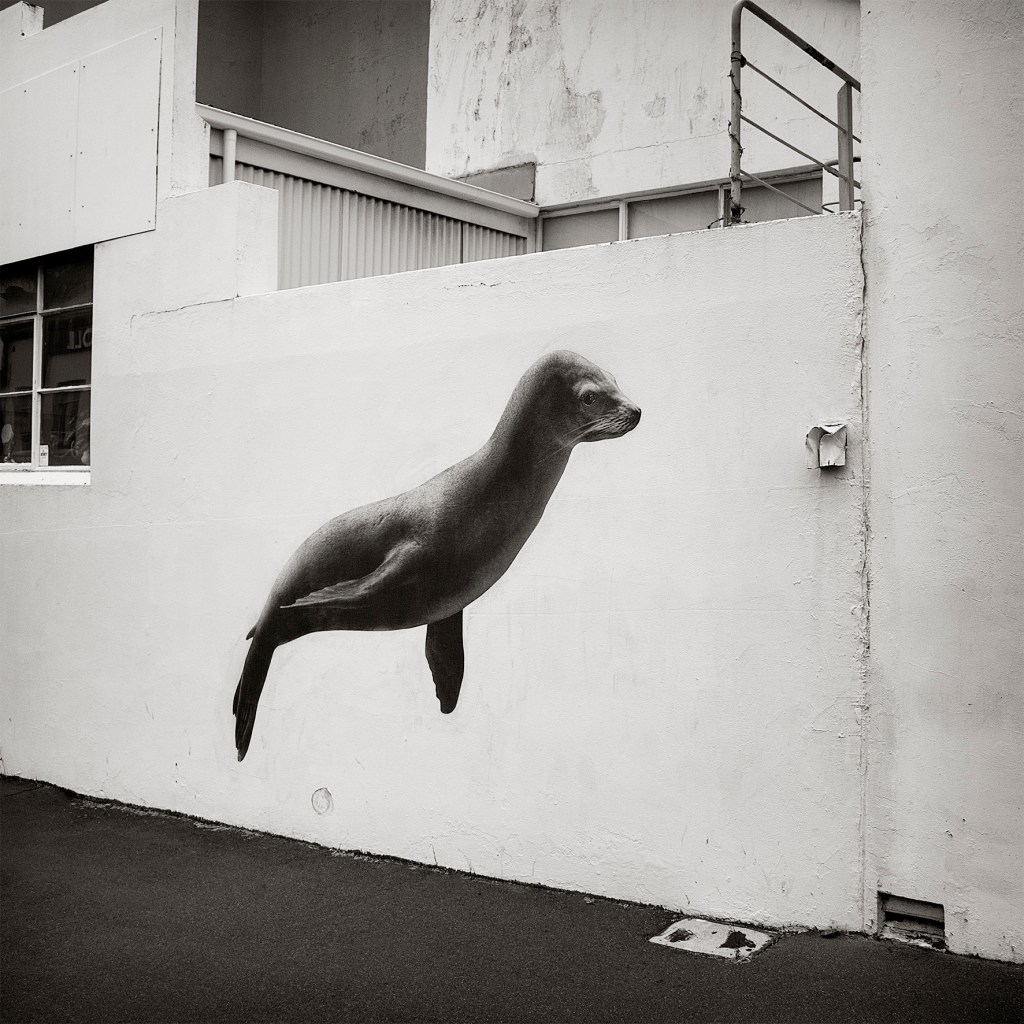
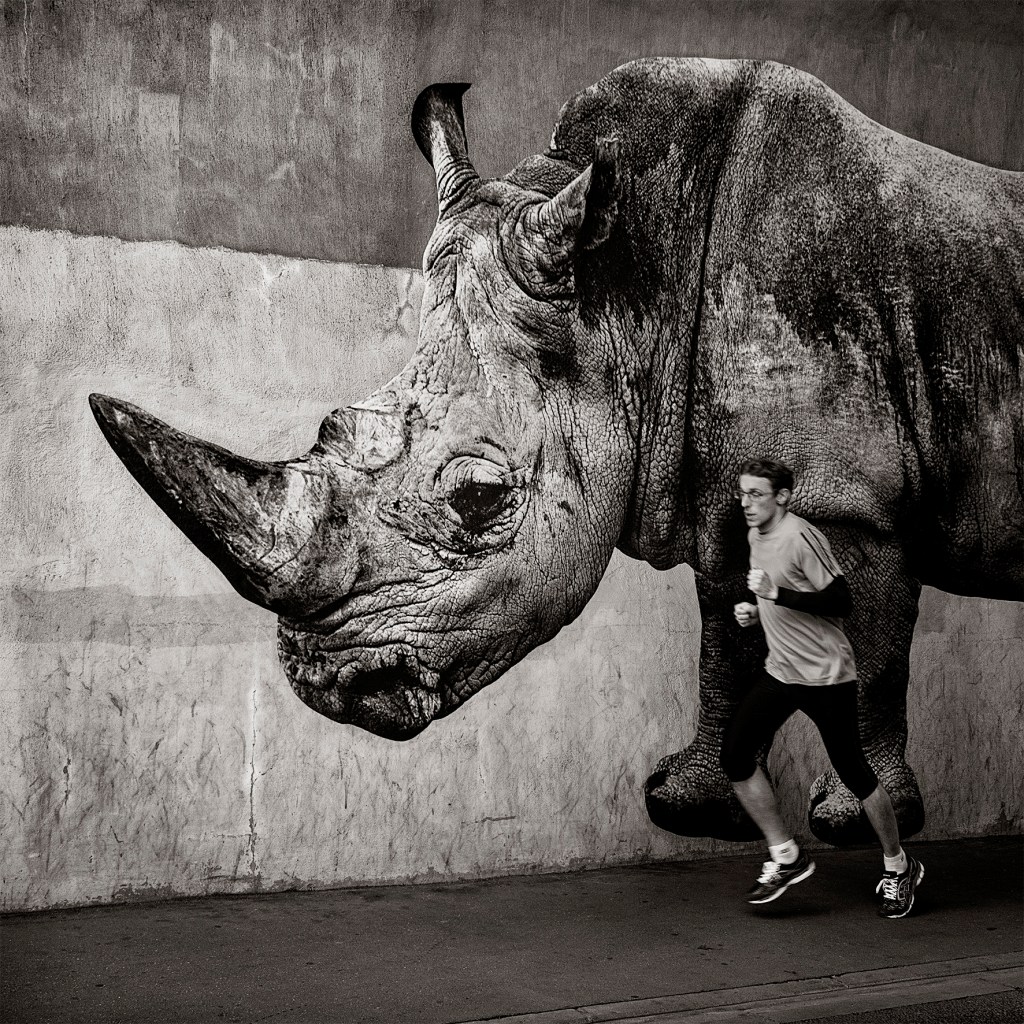
The magic of a perfect insertion.
When I first began my urban paste-ups, most of my installations were in Paris. I would scout neighborhoods during the day, taking photos and exact measurements of every wall that caught my eye. Then I’d return to my studio in the Jura to work on the mock-ups. That’s when I would dive into my image bank, which I update every year to ensure I always have a strong selection of animal portraits. For each wall I had photographed, I’d try out different animals to see which ones matched the wall’s height/width proportions.
The wall selection happened quite naturally—I only kept those with the strongest compositions. The animal’s size wasn’t the main concern; what mattered was the magic of a perfect insertion. Once the mock-ups were finalized, I printed and cut out the animals and headed back to Paris for a few days to carry out the installations. I’d take the last metro to the target neighborhood and work until dawn…
The most exciting projects for me are those where I’m invited by a city. In those cases, I ask for complete creative freedom, and I propose the mock-ups myself based on walls that interest me. I’ve had the pleasure of doing this kind of work in Strasbourg, Mulhouse, and Amiens—it’s pure joy. I avoid brand-new walls and prefer those that have lived a little, ideally with architectural features that let me play with the composition of the installation.
I try to visit all parts of the city so I can distribute the animals in a way that creates a subtle path, ensuring that anyone might encounter one by chance.
The pasting is always done in a single session, even if that means starting at 5 a.m. and finishing at the same hour the next day. This helps avoid visible glue marks on dark surfaces. My pasting technique is a bit different: I don’t leave any creases from the paper’s expansion, and I don’t coat the image with glue as other street artists do. That way, the blacks remain completely matte—and therefore much deeper.
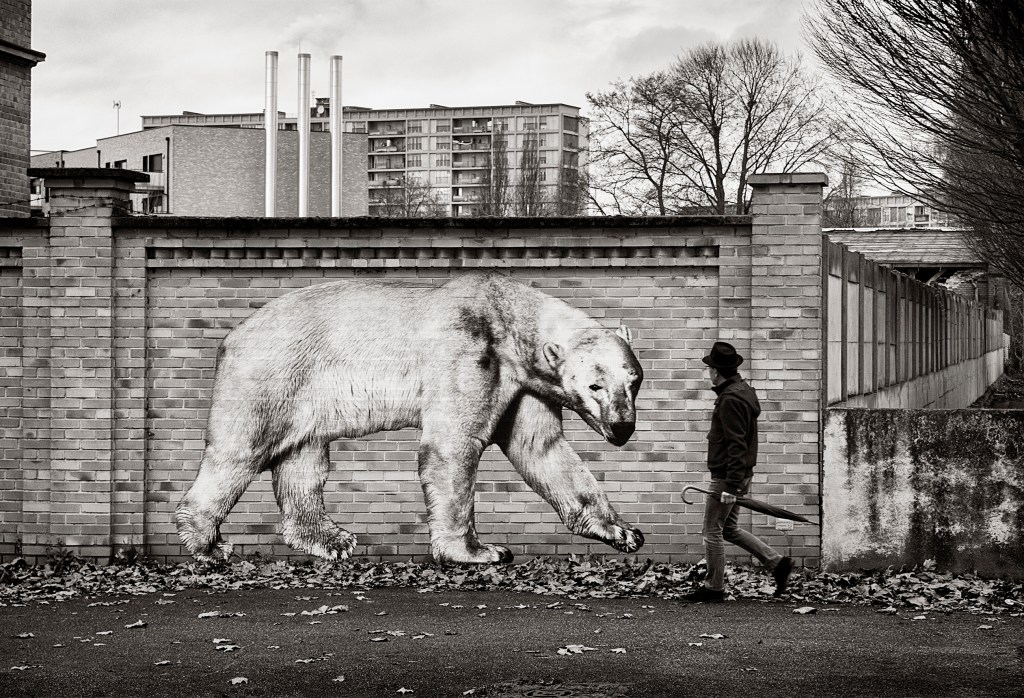
“When, early in the morning, on your way to work, still half-asleep, you think you see a bear at the corner of a street—then you know the animal has taken over the place…”
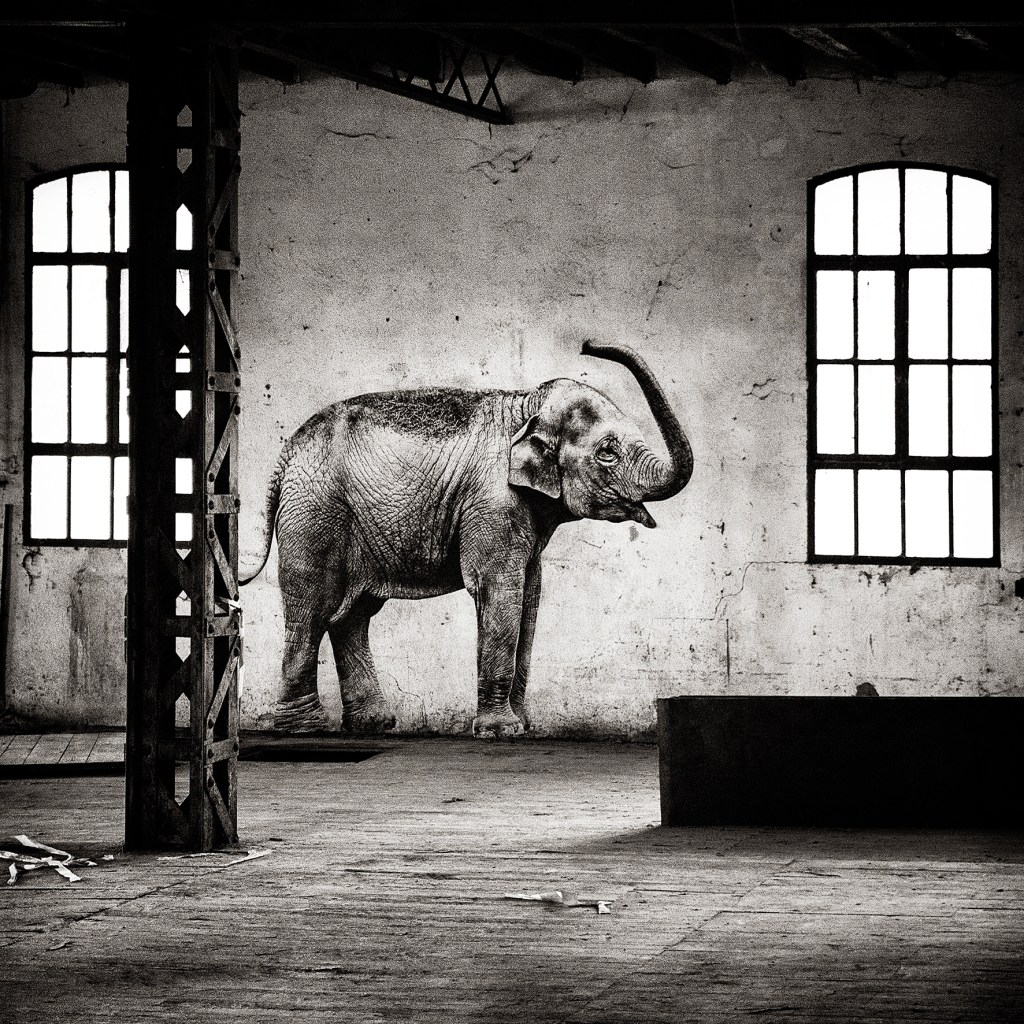
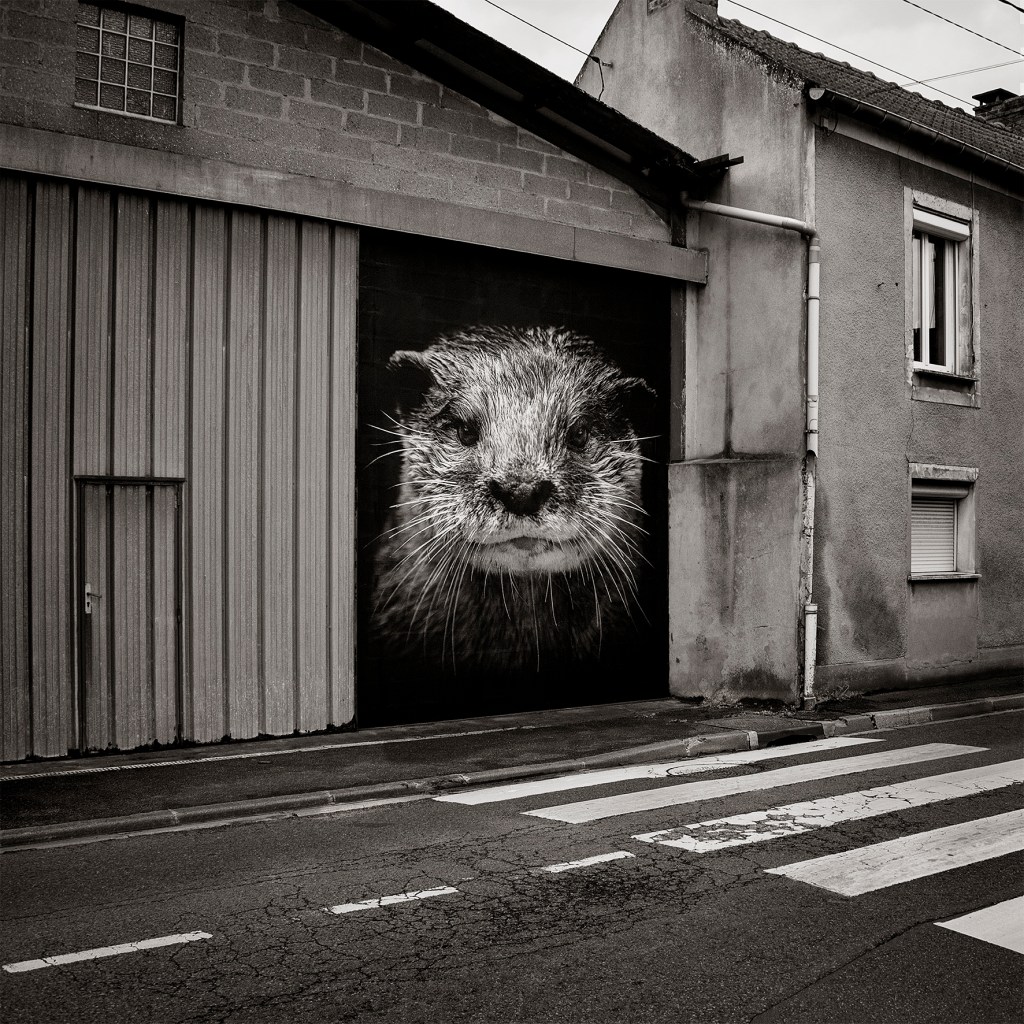
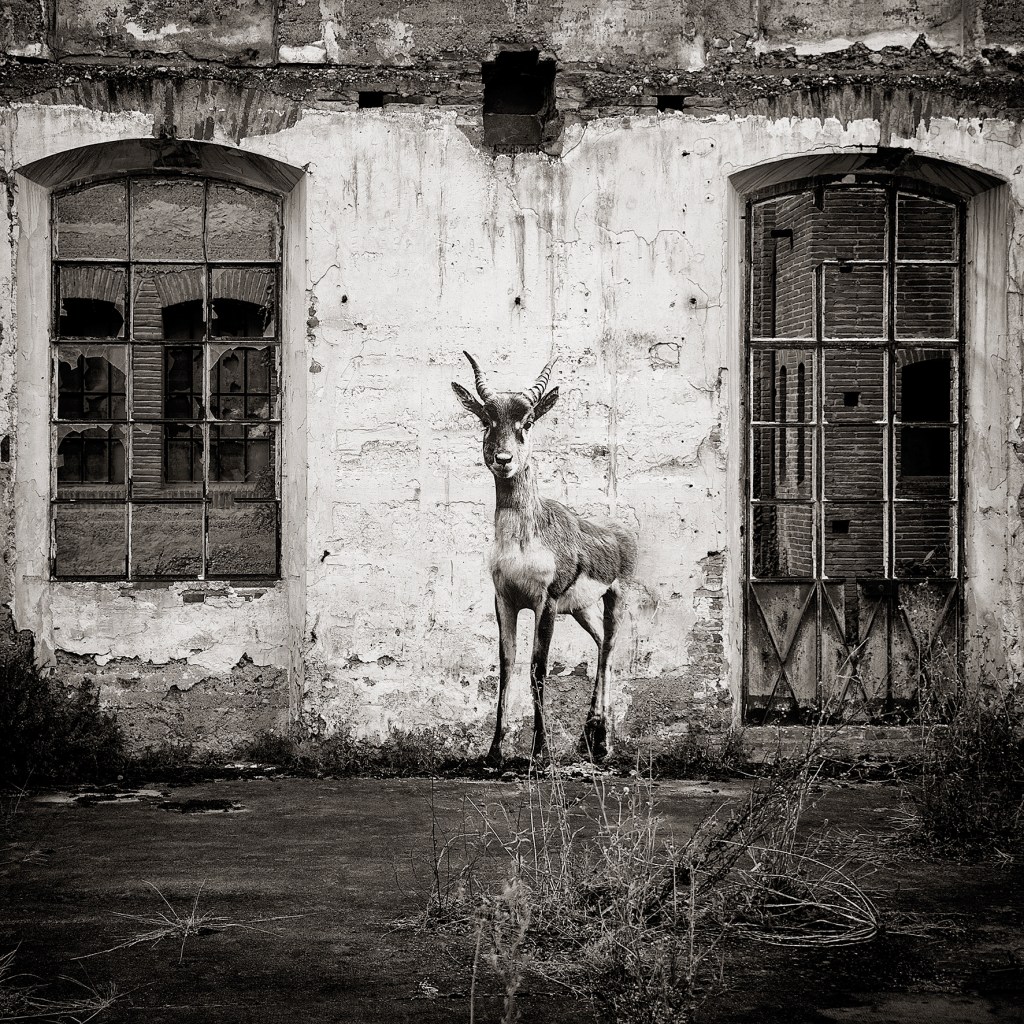
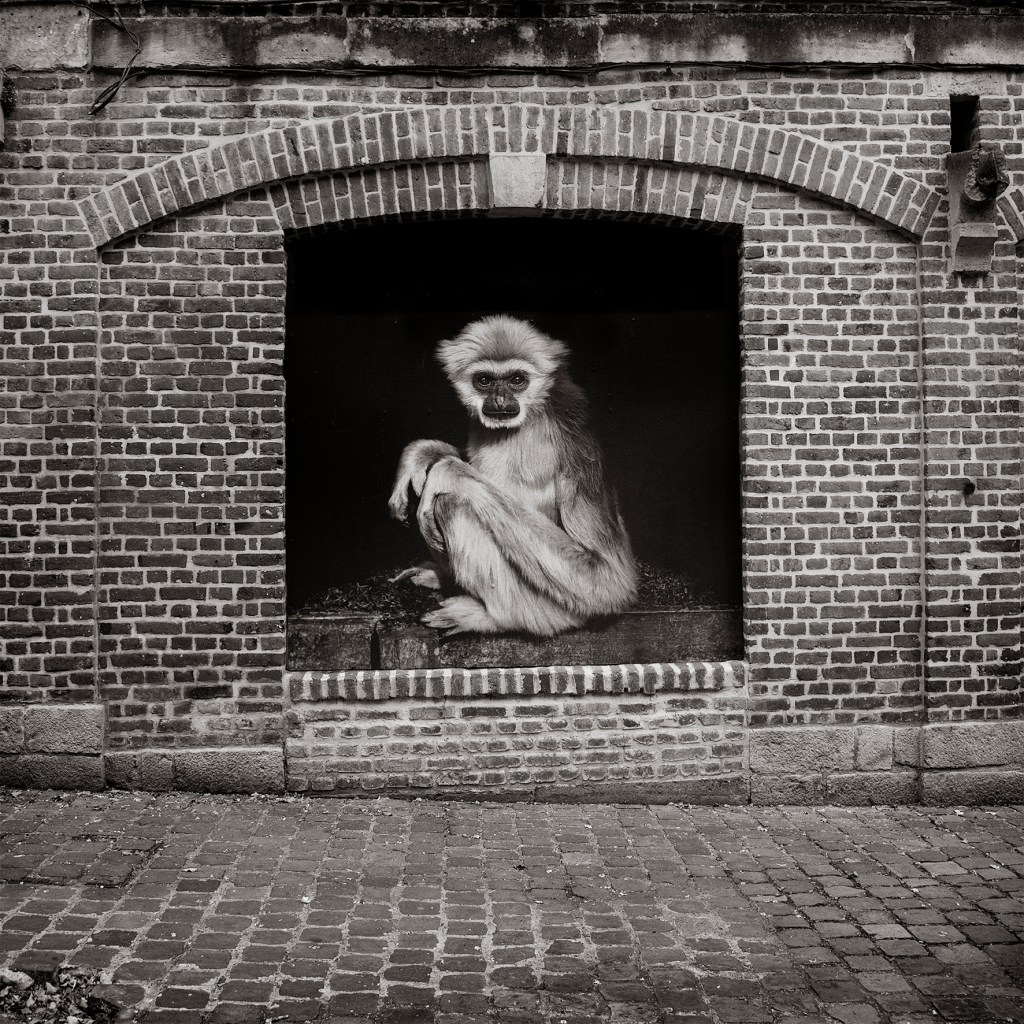
“Through her creations, Sonac offers us a shifted perspective on human-animal relations, confronting the former with its responsibilities, and restoring the latter to the space it has lost.”
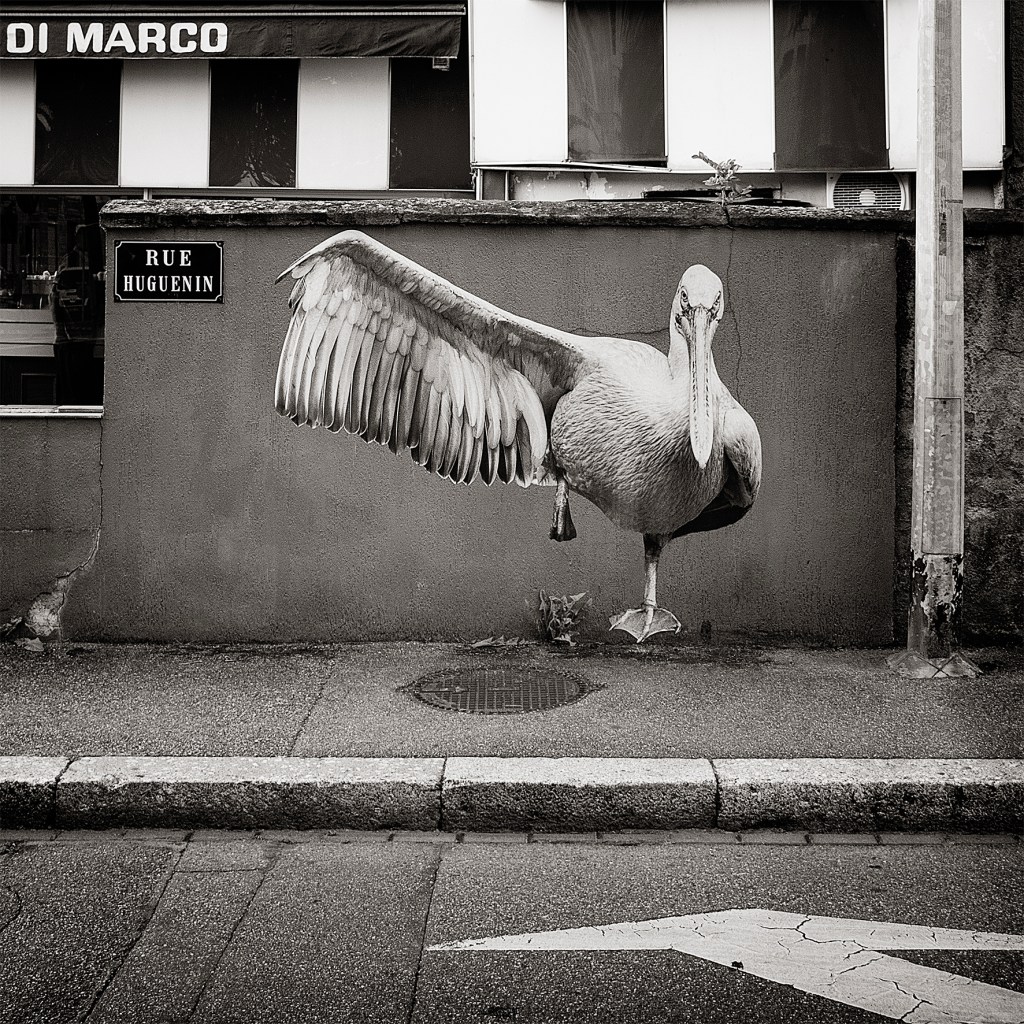
SONAC AND THE TROMPE-L’ŒIL
Space as canvas, reality as illusion
When Sonac completely covers a wall with her monumental prints, it’s not merely to dress a surface, but to summon a world. The image overflows its frame, merges with architecture, seeps into the city. The building’s lines become vanishing points, textures intertwine, materials enter into dialogue. In this subtle play between photography and structure, between collage and camouflage, the artist composes delicate trompe-l’œil that unsettle the gaze and blur perception.Her gesture is radical: to cover in order to reveal. Each installation is conceived as an immersion. The viewer no longer simply observes an image—they are drawn into it, caught in a scene where scale is disrupted, where the boundaries between reality and fiction begin to waver. The animal, often at the heart of her compositions, appears at an oversized scale, like a benevolent revenant or a majestic ghost reclaiming its place in a world grown too narrow.Sonac works with the city as one works with memory: she listens to its cracks, traces its angles, and treats its walls like a sensitive skin to be overlaid with images. Collage becomes a form of care, a poetic presence deposited into the urban space—an invitation to see differently.This immersive and temporary transformation is part of a broader approach: that of an artist questioning the relationships between image and the living world, between human and animal, between artwork and its setting. An art of emergence, of disorientation, and of raw tenderness.
An other side of my work with animals:
